01 / Production · AI previsualisation · cultural delivery
Acasă — making a local story tangible, from brief to public launch
A multi-part installation combining wood, painting, embroidery and natural wool — managed from the first Local Touch brief through visual approval, hand production and launch.
- Role
- End-to-end producer
- Format
- Handmade modular installation
- Delivery
- Artwork · content · launch
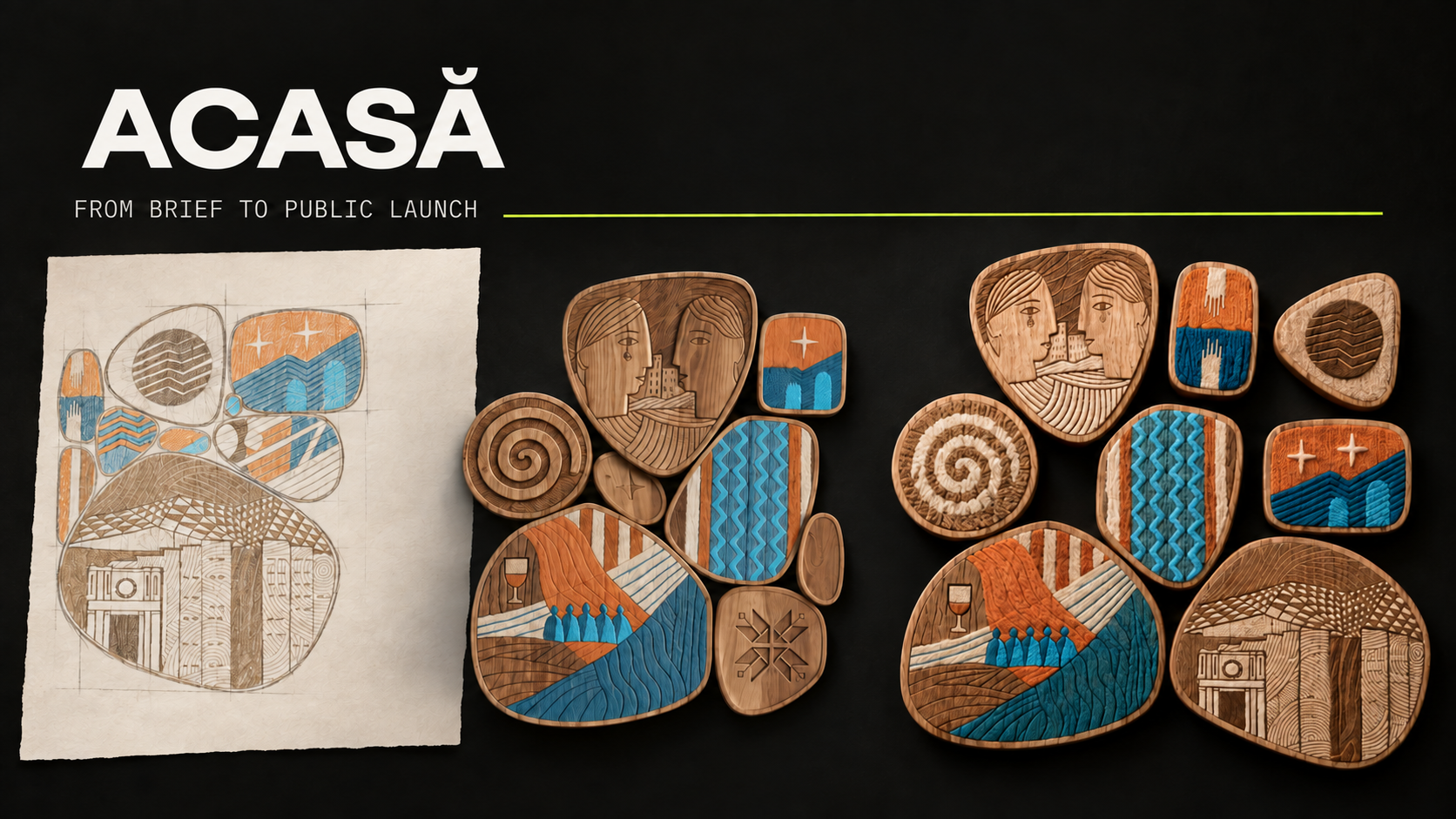
The commission
Make a brand opening belong to its city.
The Local Touch brief asked for more than an object in a retail space. It asked for a local story: an installation that could connect a technology-facing brand to the culture, craft and memory of the city from day one.
For Acasă, that became a contemporary work by Igor Nicuriuc and Nadia Izosimova. Wood, painting, embroidery and natural wool carried recognisable local references into a new composition about home, belonging and continuity.
My role was to make the creative ambition deliverable: turn the brief into a workable plan; coordinate artists, client and production; make decisions visible enough to approve; and carry the work through installation, content and launch.
The delivery challenge
Many moving parts. No room for sequential decisions.
The work had to be original and made by hand, yet also clear enough for a corporate approval process before the finished installation existed. That tension shaped every part of the delivery.
One coherent work, two artistic practices
Wood, painting and textile work had to resolve as one composition rather than separate contributions. The production plan had to protect each artist's process while keeping the shared visual direction intact.
Modular craft at a fixed destination
Thirteen handcrafted wood modules and hand-stitched textile elements had to work individually, then read as a whole in the final site. Dimensions, material behaviour, lighting and placement could not be treated as late-stage details.
Approvals while production moves
Handmade modules could not all wait for a final reveal. The project needed a way to approve the overall result, compare options and release production in parallel — without losing quality or creating avoidable rework.
Creative direction and collaboration
Give the brief local roots, then give the work a common direction.
Acasă treated tradition as source material, not decoration. The concept drew on the domestic and cultural language of Moldova — familiar forms, textures, hands, houses, landscape and motifs — then reinterpreted it in a contemporary installation.
That meant managing a shared visual system across artists, materials and milestones. The job was not to flatten different practices into one style, but to make each decision legible in the final composition: what belonged in wood, what belonged in thread, what needed paint, and what needed to change when the whole was seen together.
Visual direction
One visual language, carried from sketch to reality.
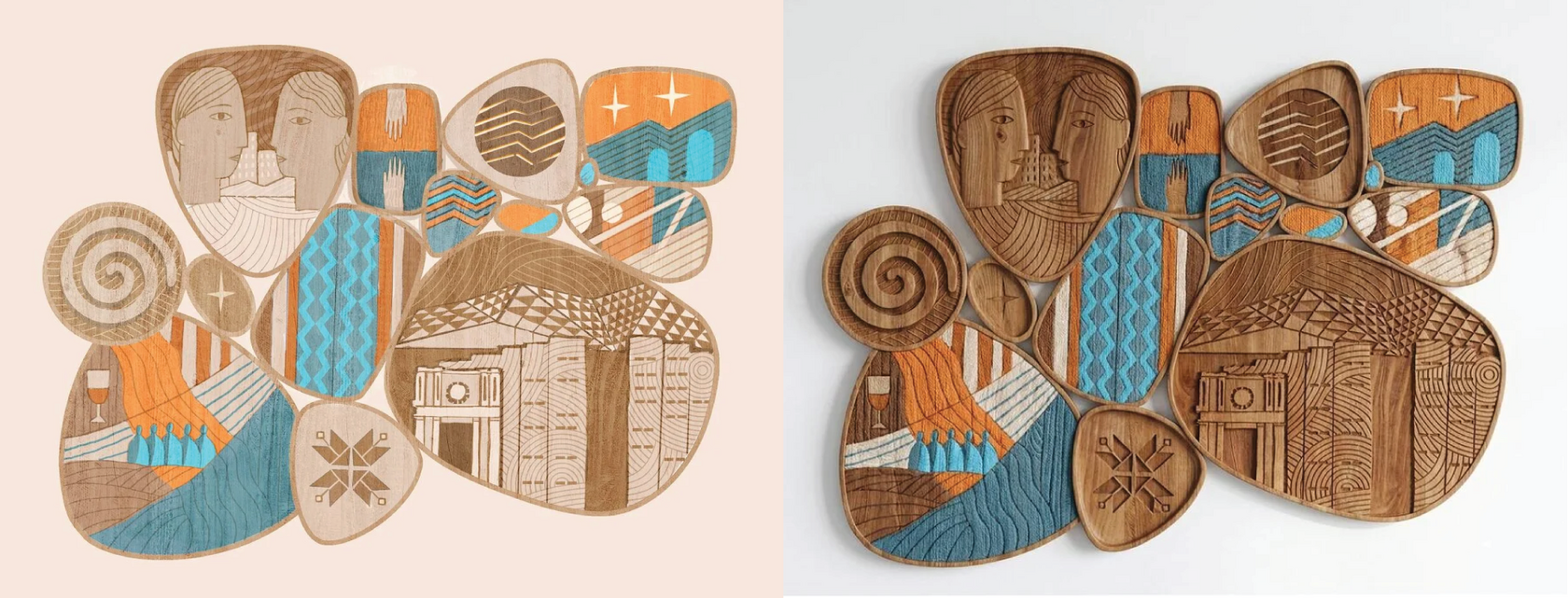
The early composition established the relationship between forms, symbols and materials. The production reference then made that direction tangible enough for artists, client and delivery team to evaluate together.
AI previsualisation
Make the future installation visible before committing the materials.
Starting from the artists' draft material, I built an AI previsualisation workflow to model plausible versions of the finished work: the installation at scale, in its intended setting, with the actual material logic and lighting conditions taken seriously.
This was not concept art presented as a finished answer. It was a project-management tool: a way to turn uncertain choices into visible options, obtain feedback earlier and make client approval specific.
- Placement and illumination — how the installation would sit in the space and how it needed to be lit.
- Material and stitching decisions — compared before sewing and fabrication locked them in.
- Module-by-module development — adjusted while other approved elements continued into production.
Because the work was modular and handmade, the assembled whole could not be postponed until the end. Previsualisation let the team evaluate the complete composition while individual parts were still open to change. Production kept moving, feedback arrived faster and approval happened against evidence rather than description.
The generated images were not the artwork. They were the shared reference that made the artwork easier to approve, build and deliver.
Extending the system
Preview the launch ecosystem, not only the installation.
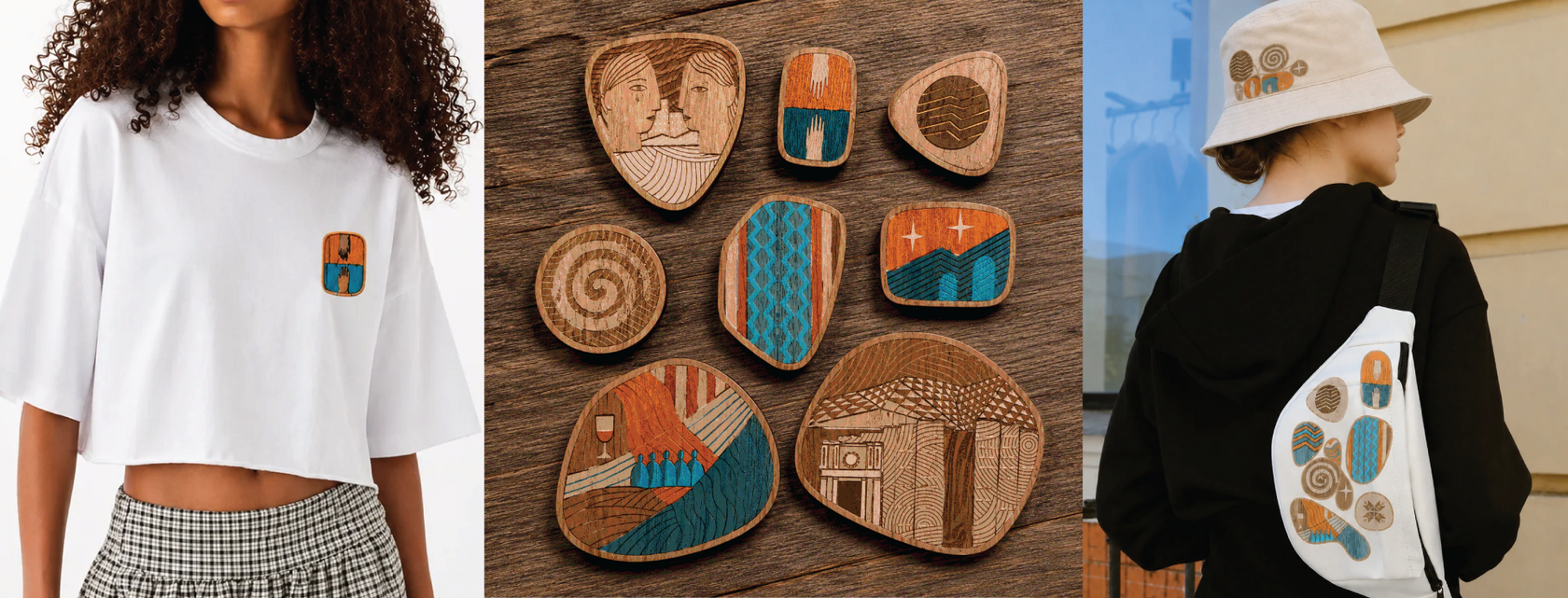
The same visual workflow was used to test how Acasă could live beyond the central artwork. Merchandise renders allowed the wider launch idea to be reviewed early, while there was still time to change direction without slowing physical production.
Production control
Thirteen modules, one finished composition.
Once direction was approved, the work moved into hand production across two disciplines. Thirteen handcrafted wood modules and textile elements were monitored against the agreed visual reference, then checked again in relation to the whole.
The scale made coordination tangible: the public project record notes 480 hours of handwork, 100 metres of natural wool, 500,000 stitches and a five-square-metre composition. Each figure represents a dependency to plan, check and bring together.
The management task was to hold three things together: craft quality, practical installation requirements and the client-approved composition. Early decisions reduced late corrections; still-open decisions remained visible and controlled until they were ready to release.
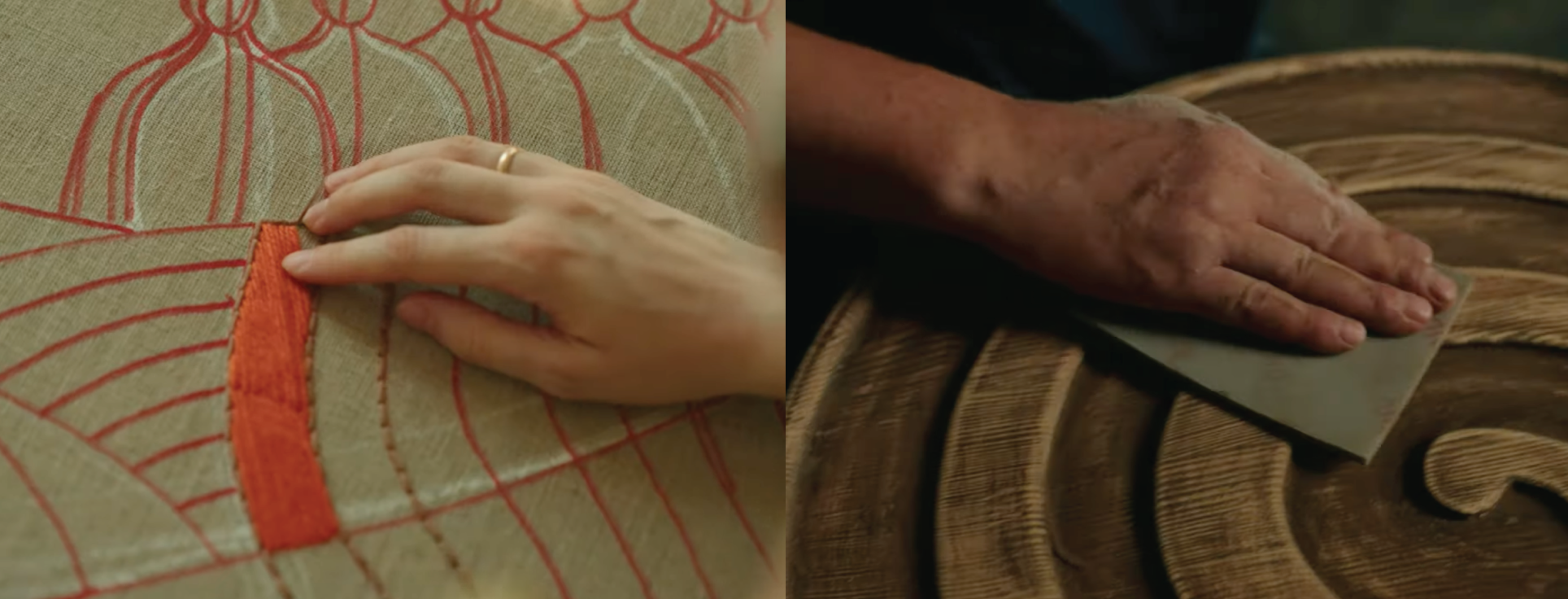
Work in progress
Handwork, sequencing and material control.
The installation was resolved through physical labour: carving, painting, stitching, checking and assembling. This production view keeps the human craft visible alongside the digital planning that supported it.
Launch and public life
One installation, a complete rollout.
The installation was part of a wider public-facing delivery: a dedicated project page, supporting content, merchandise, a process film and a launch moment in the retail space. The communication did not sit after the project; it carried the same local story into each touchpoint.
Process film
From first marks to the finished installation.
Outcome
Approval accelerated. Craft stayed central.
Acasă made it from an open brief to a finished public installation by treating creative development, client approval and production as one coordinated system.
The AI workflow did not make the artwork. It made the artwork possible to see, discuss and approve earlier — so handmade production could proceed with more confidence, less avoidable rework and a clearer shared target.
Technology mix
ComfyUI · GPT image models